ABOUT
ARAWANA HAYASHI
Arawana is
curious about:
open space
not-knowing non-doing spaces
ma
true moves
Earth and Sky as allies
something coming from nothing
trusting sense perceptions
dancing
LINEAGES
“Teachers have generously and kindly passed to me the teaching of their lineages. I aspire to practice what has been passed to me and to share these with others”
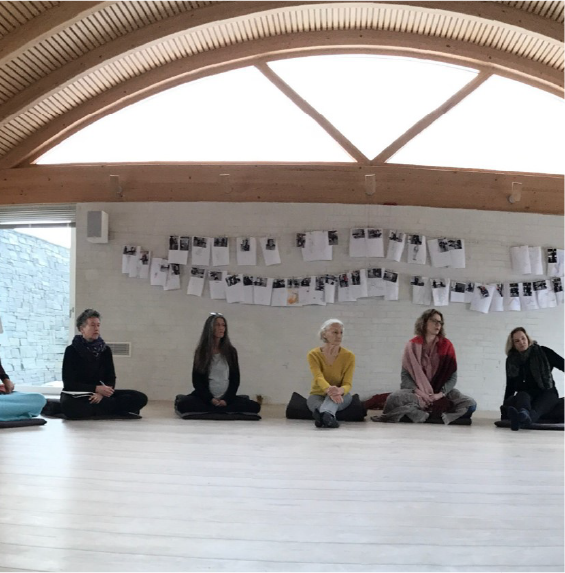
Meditation &
Dharma Art
“Genuine art—dharma art—is simply the activity of nonaggression.”
Chogyam Trungpa.
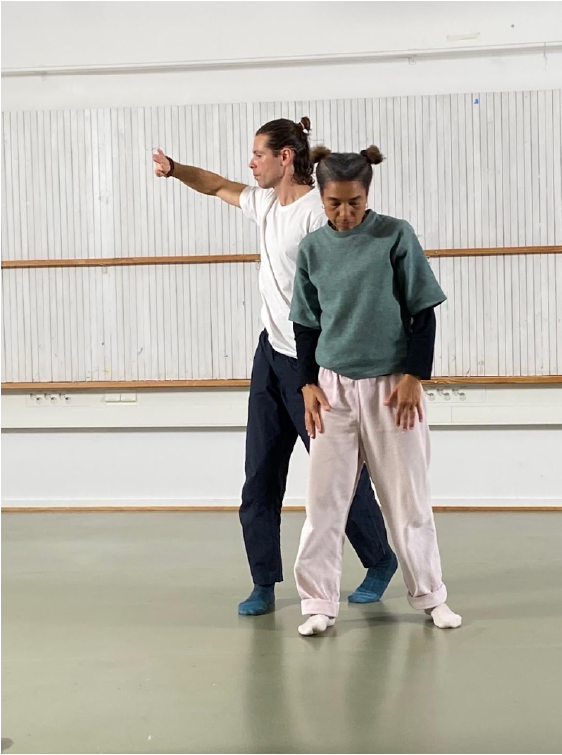
Creative Process
Not knowing what comes next
Space knows
the true move
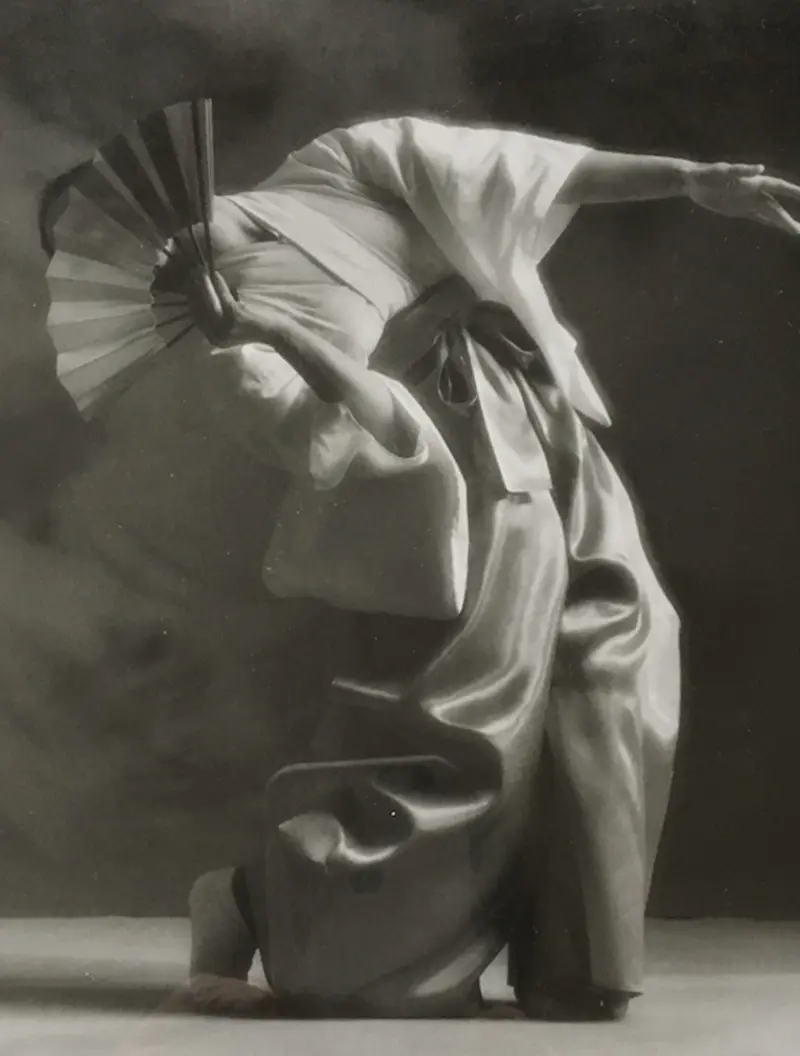
Japanese
Court Dance
The vision of spacious harmony is evoked and brought to Earth by the Japanese Court dance, bugaku. As a student of Suenobu Togi, Sensei from 1977 until his passing in 2009, continuing to practice with others who love this art—ancient ceremony is Now.
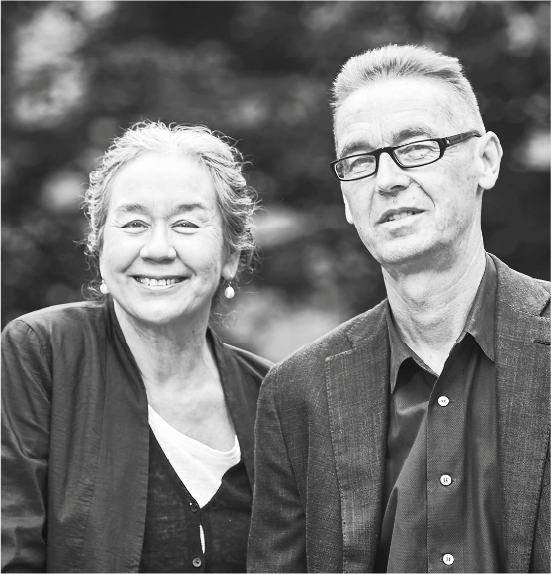
Systems Thinking
An unlikely pairing—Otto Scharmer and the MIT world of systems change and dance—making visible the space between what is and what longs to emerge. Social Presencing Theater practices awaken embodied knowing in individuals and social fields.
Arawana is a co-founder and core faculty at the Presencing Institute and guides the creation of Social Presencing Theater (SPT) with Manish Srivastava and colleagues. The work cultivates embodied awareness that can reveal both the depth of current reality and the potential of what is coming into being.
She joins Peter Senge and Otto Scharmer for the Executive Champions Workshop in Vermont, and collaborates with Phil Cass at the Physicians Leadership Program in Columbus, Ohio. She teaches for Emana Formacion in Bilbao and collaborates with Ricardo Dutra at Aalto University in Helsinki and colleagues in France and Denmark in developing Pedagogies of Togetherness for schools. She is the author of Social Presencing Theater: The Art of Making a True Move.
Moving beneath the surface of habit and reaction, vast intelligence and care empowers action that naturally aligns with the wellbeing of the whole. In a world longing for authentic leadership and genuine connection, Arawana offers her work as an artist and teacher, as an invitation to rediscover what is already present—the innate wisdom that responds to our times with compassion, clarity, and care for life. In 2023, her work received recognition at the Fetzer Foundation’s convening on Love, Racial Justice, and Spiritual Transformation.
Publications (2026)
Book
Hayashi, Arawana. Social Presencing Theater: The Art of Making a True Move Cambridge: PI Press, 2021
Book Chapter
Hayashi, Arawana “Social Presencing Theater: How do we listen to our body-knowing to access the wisdom that lives in us” Advances in Presencing Volume III: Collective Approaches in Theory U, Ed. Olen Gunnlaugson and William Brendel, pp 25-41. Vancouver. Trifoss Business Press
Ricardo Dutra Goncalves and Arawana Hayashi. “Awareness Based Collective Creativity: Studios for Social Future Making,” Routledge Handbook for Creative Futures, Ed. Gabrielle Donnelly and Alfonso Montuori, Routledge (forthcoming Dec 2022)
Journal articles
Arawana Hayashi. “Streams of Origin for Social Presencing Theater and Its Contribution to Social Transformation.” Journal of Awareness-Based Systems Change, Vol 5 Issue 1 (2025) pp13-36
Sebastian Jung and Arawana Hayashi. “4D Mapping: An Embodied Awareness- Based Approach to Regenerative Organizational Development.“ Journal of Awareness-Based Systems Change, Vol 5 Issue 1 (2025) pp 37-30
Eva Pomeroy, Arawana Hayashi, Sebastian Jung, Beth Mount, Asiya Odugleh-Kolev, Otto Scharmer, Ericks Toledo-Zurita, and Joost van der Cruijsen. “Knowing in the Bones: Embodying and Uncovering Systems” Journal of Awareness-Based Systems Change, Vol 5 Issue 1 (2025) pp 184-202
Arawana Hayashi and Ricardo Dutra Goncalves. “A Pattern Language for Social Field Shifts: Cultivating Embodied and Perceptual Capacities of Social Groups through Aesthetics and Social Field Archetypes.” Journal of Awareness-Based Systems Change, Vol 1 No 1 (2021) pp 35-57
Arawana Hayashi, “Feminine Principle and Theory U”, Oxford Leadership Journal
Arawana Hayashi. ”Jo Ha Kyu,” Spring Wind, Vol 5 No. 3 (Fall 1985) pp 59-73.